Comprehensive Guide to Finding a Leak in Concrete Floor: Expert Solutions for 2025
Understanding the Basics of Slab Leaks in Concrete Floors
Detecting a leak in concrete floor can often feel like a daunting task for homeowners, as these leaks are typically concealed beneath the foundation. Slab leaks specifically refer to water leaks that occur under the concrete slab of a home, primarily due to issues with the plumbing pipes that run through or beneath it. Recognizing the signs early on is imperative to prevent significant structural damage and costly repairs.
What is a Leak in Concrete Floor?
A leak in a concrete floor, often referred to as a slab leak, arises when copper plumbing lines corrode or break beneath the concrete foundation. This type of leak is particularly problematic as it can lead to pooling water, increased utility bills, and potential damage to the foundation itself if not addressed promptly. Homeowners may notice signs such as warm spots on the floor or increased water usage, which often indicate the presence of such a leak.
Common Causes of Slab Leaks
Several factors can lead to slab leaks under concrete floors, including:
- Soil Movement: Shifting soil due to natural settling, expansion, or contraction can place pressure on the pipes.
- Corrosion: Over time, pipes may corrode from chemical reactions with the soil or water quality, leading to leaks.
- Poor Installation: If pipes were not correctly installed, they may be more prone to damage and leakage.
- Temperature Changes: Extreme temperature fluctuations can cause materials to expand or contract, stressing the plumbing.
- Tree Roots: Roots can infiltrate plumbing systems, causing damage and resulting in leaks.
Identifying the Symptoms of a Leak in Concrete Floor
Homeowners should be vigilant for various signs that could indicate a leak beneath their concrete flooring. Common symptoms include:
- Unexplained Moisture: Wet spots on the floor or around the perimeter of the home may signal a leak.
- Warm or Hot Areas: Areas of the floor that feel unusually warm could indicate a hot water pipe leak.
- Increased Water Bills: A sudden spike in water usage without a corresponding increase in activity can hint at a hidden leak.
- Mold or Mildew Growth: Unpleasant odors or visible mold growth can arise from persistent moisture due to slab leaks.
- Sound of Running Water: Hearing water running when no faucets are in use could be an indication of a leak.
Advanced Detection Techniques for Concrete Floor Leaks
Once a leak is suspected, it is essential to employ advanced detection techniques to accurately locate the source without causing unnecessary damage. Various technologies can assist in identifying leaks beneath concrete floors.
Thermal Imaging: A Game Changer
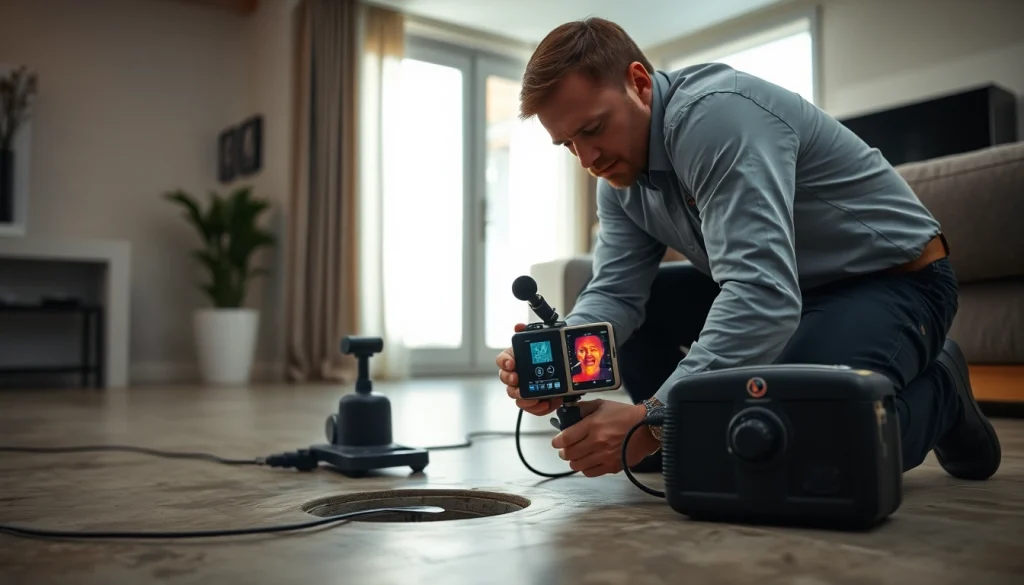
Thermal imaging cameras are invaluable tools in modern leak detection. By detecting temperature variations in the concrete, technicians can pinpoint areas where water might be escaping. This non-invasive method is efficient and can quickly reveal hidden leaks without destroying the concrete.
Acoustic Listening Devices: How They Work
Acoustic listening devices are used to detect the sound of water escaping from pipes beneath the concrete. These microphones can pick up the sound of dripping or leaking water even if it is several feet below the surface. This technique is particularly effective for locating small leaks that are hard to identify through visual inspection.
Pressure Testing and Moisture Mapping
Pressure testing involves isolating segments of piping to determine if there is a drop in pressure, indicating a leak. Moisture mapping uses moisture meters to identify damp areas in the concrete, helping to establish the extent of water damage. Both methods are crucial for accurately diagnosing slab leaks.
The Consequences of Ignoring a Leak in Concrete Floor
Neglecting a leak in a concrete floor can lead to severe consequences, both structurally and financially. Understanding these risks can motivate homeowners to act swiftly when they suspect a leak.
Structural Damage Risks
As water continually flows from a leak, it can erode the soil supporting the foundation, leading to structural instability. Cracks may develop in the flooring or walls, and, in severe cases, the foundation could shift or settle unevenly.
Health Hazards: Mold and Mildew
Persistent moisture creates an ideal environment for mold and mildew growth, which can pose health risks to residents. Exposure to mold can lead to respiratory issues and exacerbate allergies and asthma conditions.
Financial Implications of Delayed Repairs
Ignoring a slab leak can result in skyrocketing water bills as leaks worsen over time. Additionally, the costs associated with repairing extensive water damage can be significantly higher than addressing the problem early. Quick action can save homeowners from headaches and financial burdens down the line.
Effective Repair Strategies for Concrete Floor Leaks
When addressing leaks under concrete floors, homeowners have several repair options to consider. Each method varies in invasiveness and cost-effectiveness.
Traditional Methods vs. Non-Invasive Approaches
Traditional repair methods often involve breaking through the concrete slab to access the pipes directly. While this approach can be effective, it can also be disruptive. In contrast, non-invasive techniques, such as epoxy pipe lining, allow for repairs without extensive excavation.
Using Tracer Gas Detection for Precision Repairs
Tracer gas detection involves introducing a non-toxic gas into the plumbing system. When the gas escapes through a leak, it can be detected on the surface, enabling precise identification of leak locations without invasive procedures.
Choosing the Right Professionals for Leak Repairs
Selecting experienced leak detection professionals is crucial for effective repairs. Look for companies with certifications and a proven track record in leak detection. A qualified technician will provide not only diagnostic services but also repair solutions tailored to your specific issue.
Future Trends in Leak Detection and Repair Technologies
The field of leak detection is continually evolving, with new technologies and methods emerging that promise to enhance efficiency and accuracy.
Innovations in Leak Detection Technologies for 2025
As we move into 2025, advancements in technology will likely lead to even more sophisticated leak detection systems, including AI-driven analysis tools that can predict and diagnose leaks before they become problematic. These innovations may incorporate machine learning algorithms that analyze historical data for optimal diagnostics.
Sustainability in Leak Repair Practices
There is a growing emphasis on sustainable practices in plumbing and leak repair. Innovative materials that reduce environmental impact and improve efficiency are gaining traction. These methods can include the use of eco-friendly sealants and techniques that minimize waste during repairs.
The Growing Importance of Preventative Measures
Homeowners are becoming increasingly aware of the importance of preventative measures in avoiding leaks altogether. Regular inspections and maintenance of plumbing systems not only prolong their lifespan but also help mitigate the risk of costly repairs associated with leaks.